Technology is one of the greatest achievements of human creativity. From smartphones and computers to the internet, artificial intelligence, social media, and digital communication, technology has transformed the way we live, work, learn, communicate, and solve problems.
Technology itself is not evil. The real question is how we use it.
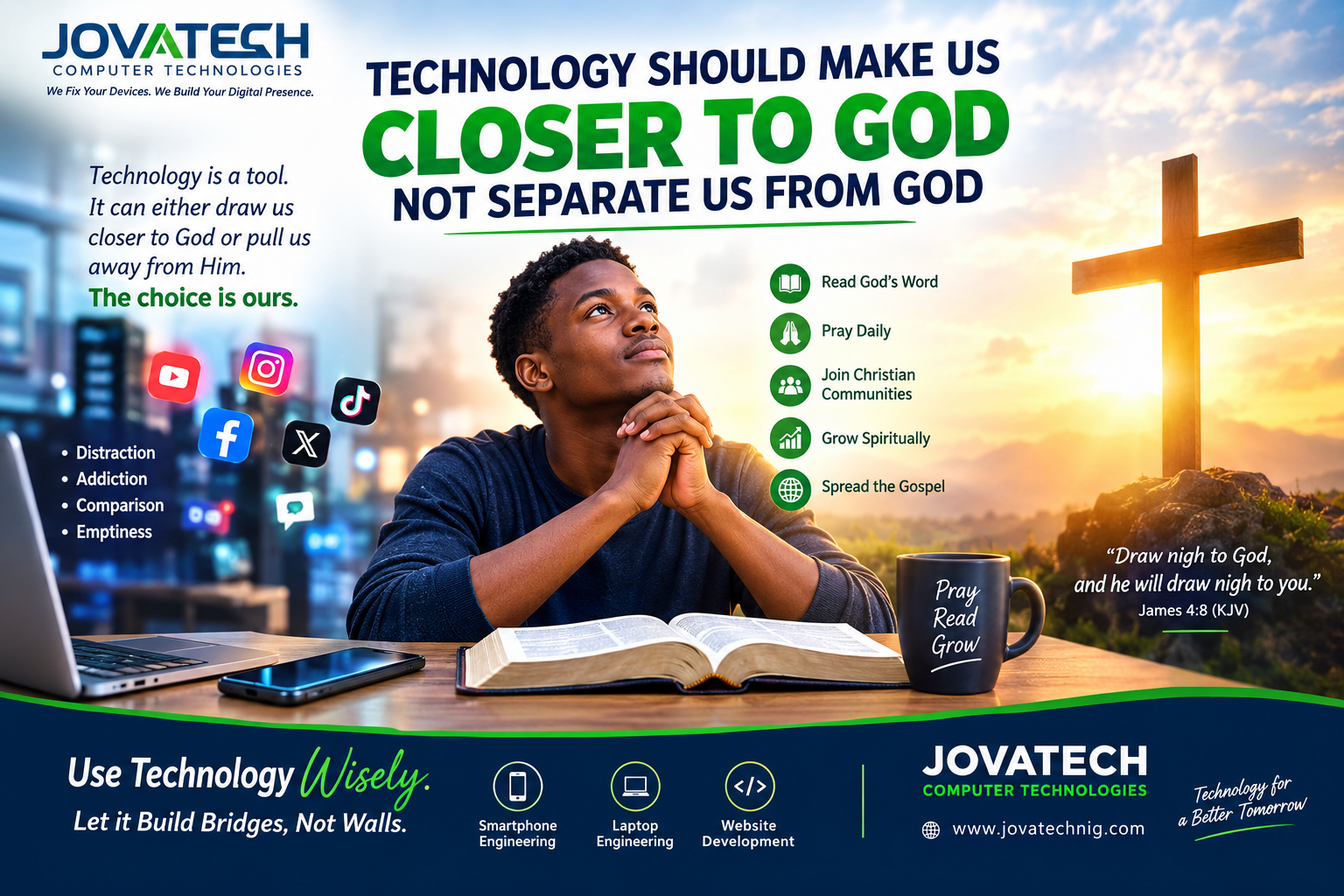
A smartphone can be used to read the Bible, listen to sermons, join a prayer meeting, encourage someone, or spread the Gospel. The same smartphone can also become a source of distraction, addiction, immorality, comparison, and spiritual emptiness.
Therefore, the problem is not always the technology in our hands; sometimes, it is what technology is doing to our hearts.
Technology Should Be a Tool, Not a Master
Technology was created to serve humanity, not to control humanity.
Unfortunately, many people have reached a point where they cannot spend a few minutes without checking their phones. They wake up and reach for their phones before they pray. They spend hours scrolling through social media but struggle to spend a few minutes reading God's Word.
Some people know the latest trends on TikTok, Instagram, YouTube, Facebook, and other platforms, but barely know what the Bible says.
This should make us stop and ask ourselves:
Who is controlling whom?
Are we using technology, or is technology using us?
The Bible reminds us:
«“All things are lawful for me, but all things are not helpful.” — 1 Corinthians 6:12 (KJV)»
Not everything that technology makes available is necessarily beneficial to our spiritual lives.
Technology Can Help Us Grow Spiritually
Technology has made access to God's Word easier than ever before.
Today, a person can carry several translations of the Bible on a smartphone. You can listen to Christian sermons while travelling. You can join online Bible studies and prayer meetings. You can access Christian books, devotionals, worship music, theological resources, and educational materials from almost anywhere.
Someone living in a remote location can hear the Gospel through the internet.
A young person struggling to understand Scripture can find educational resources online.
A Christian who cannot physically attend a meeting can participate virtually.
Technology has therefore created enormous opportunities for spiritual growth.
The question is:
Are we using these opportunities?
The Danger of Digital Distraction
One of the greatest dangers of modern technology is distraction.
You may intend to spend 30 minutes studying the Bible, but after picking up your phone, a notification appears. You check it. Then you see another message. You open social media. One video leads to another.
Before you realize it, an hour has passed.
The Bible is still unopened.
Prayer has been postponed.
And the time that could have been spent with God has been consumed by a digital world.
Technology can quietly steal our attention without us realizing it.
This is why we must learn to control our devices instead of allowing our devices to control us.
We Must Not Allow Technology to Replace God
There is a difference between using technology to serve God and allowing technology to take God's place in our lives.
Technology can provide information, but it cannot give us eternal life.
Technology can connect us to thousands of people, but it cannot replace genuine fellowship with God.
Technology can entertain us, but it cannot satisfy the deepest needs of the human soul.
Technology can give us access to sermons, but it cannot replace personal prayer.
Technology can display the Bible on our screen, but we must still allow God's Word to transform our hearts.
Our devices should point us toward God—not become gods themselves.
Social Media and the Christian Life
Social media can be a blessing when used wisely.
We can use it to encourage people, share God's Word, support good causes, promote truth, communicate with family, and reach people who may never enter a church building.
But social media can also create serious spiritual problems.
The constant desire for likes, followers, comments, and approval can make people measure their value by the opinions of others.
People begin comparing their lives with carefully edited versions of other people's lives.
This can produce envy, dissatisfaction, pride, anxiety, and a constant hunger for recognition.
As Christians, we must remember that our worth does not come from the number of followers we have.
Our identity must be rooted in God, not in social-media validation.
Artificial Intelligence and Our Responsibility
Artificial intelligence is another powerful development of modern technology.
AI can help us learn, research, communicate, develop software, analyze information, and solve complex problems.
But even with powerful technologies such as AI, human beings must retain wisdom, discernment, responsibility, and dependence on God.
We should never become so dependent on technology that we stop thinking, stop learning, stop praying, or stop seeking God's direction.
Technology can assist our minds, but it should never replace our relationship with God.
Technology Should Help Us Fulfill Our Purpose
God has given human beings creativity and the ability to develop knowledge and tools.
Therefore, technology can be used for meaningful purposes.
A programmer can build software that solves problems.
A teacher can use technology to educate.
A doctor can use technology to save lives.
A business owner can use digital platforms to serve customers.
A Christian can use the internet to spread the Gospel.
A young person can use technology to acquire skills and build a meaningful future.
Technology becomes powerful when it is placed in the hands of people who understand their purpose.
Instead of asking only:
“What can technology do for me?”
we should also ask:
“What can I do with technology that will glorify God and benefit humanity?”
We Need Digital Discipline
As technology continues to advance, Christians need something that is often overlooked:
digital discipline.
We need to know when to put our phones down.
We need to create time for prayer.
We need to study God's Word without unnecessary digital interruptions.
We need to protect our minds from harmful content.
We need to be careful about what we watch, listen to, read, share, and consume online.
We need to remember that having access to everything does not mean we should consume everything.
The Apostle Paul wrote:
«“And be not conformed to this world: but be ye transformed by the renewing of your mind.” — Romans 12:2 (KJV)»
Our minds need protection, especially in an age where information is constantly competing for our attention.
Let Technology Become a Bridge, Not a Wall
Technology should build bridges.
It should help us communicate with people, spread knowledge, solve problems, support families, educate communities, and share the message of Christ.
But if technology causes us to neglect God, neglect our families, neglect our responsibilities, and lose control of our time, then something needs to change.
We must learn to use technology intentionally.
Don't allow your smartphone to become the first thing you worship in the morning.
Before checking notifications, remember the One who gave you another day.
Before scrolling through social media, spend time with God.
Before consuming endless entertainment, ask whether what you are consuming is building or destroying your mind.
Before using technology, ask yourself:
“Is this helping me become the person God wants me to become?”
The Future Needs Spiritually Responsible Technology Users
Technology will continue to advance.
Artificial intelligence will become more powerful.
Smartphones will become more sophisticated.
The internet will become even more deeply integrated into our lives.
But technological advancement without wisdom can create serious problems.
We therefore need people who are not only technologically intelligent but also morally responsible and spiritually grounded.
We need people who can build technology without becoming slaves to it.
We need people who can use artificial intelligence without losing human wisdom.
We need people who can use social media without becoming addicted to social approval.
We need people who can embrace innovation while maintaining their relationship with God.
Conclusion
Technology is a gift when used responsibly.
It can educate us.
It can connect us.
It can empower us.
It can help us solve problems.
It can create opportunities.
And it can even help us spread the Gospel around the world.
But technology must remain a servant, not a master.
Let us therefore use our smartphones, computers, artificial intelligence, social media, and the internet wisely.
Let our technology become an instrument for good.
Let our digital lives reflect our spiritual values.
Let our innovation serve humanity.
And above all, let technology lead us toward God rather than away from Him.
Technology should make us more connected—not only to one another, but also to our Creator.
«“Draw nigh to God, and he will draw nigh to you.” — James 4:8 (KJV)»
A FINAL QUESTION
If technology disappeared from your life today, would your relationship with God become stronger or weaker?
Your answer may reveal whether you are using technology as a tool—or allowing technology to become your master.